Aluminum foil lamination techniques play a critical role in protecting products. Today, the modern food and cosmetics industries heavily rely on these methods. These specialized foils successfully isolate products with sensitive ingredients from external factors. Consequently, they preserve freshness for a much longer time. In particular, the high barrier properties prevent the transmission of moisture, light, and oxygen. Therefore, the shelf life of the products extends significantly.
The corporate production process begins with processing high-quality granules. Polymer materials such as PP, PE, and PET constitute the fundamental building blocks. As a result, these petrochemical plant resources shape the complex production process.
First, the machinery melts the granulated raw material at extremely high temperatures. This process transforms the material into a liquid form. Next, the molten plastic passes through a specialized die to become an incredibly thin film. Packaging film manufacturers generally prefer Cast film or durable BOPP techniques. Specifically, the BOPP method stretches the film in both directions during production. Thus, the surface becomes much glossier and highly resistant to physical impacts.
Additionally, the applied corona treatment increases the surface energy of the film. This step effectively prepares the surface for the next stage. Consequently, substances such as ink and adhesive adhere much more strongly. All these technological preparations establish a flawless foundation for professional aluminum foil lamination techniques.
Manufacturers select the vacuum metallization method to enhance the protective barrier capacity. In this process, aluminum wire evaporates at high temperatures. Then, it adheres to the film surface at a microscopic level. In this way, the film acquires a sleek and glossy metallic appearance to catch the consumer’s attention.
The aluminum foil lamination techniques are essentially based on combining two or more films. For this purpose, engineers use specialized adhesives. This multilayer structure increases the overall strength and tear resistance of the packaging. Furthermore, it completely cuts off contact with harmful environmental gases. As a consequence, product safety reaches the highest level. You can always contact our expert team to receive detailed information about our laminated packaging solutions.
After the lamination process, we wait for the specialized adhesives to cure at full performance. Afterward, we use advanced methods like rotogravure or flexo printing. These high-resolution techniques perfectly reflect the visual identity of your brands. Moreover, we print brand-specific colorful designs and logos with maximum precision.
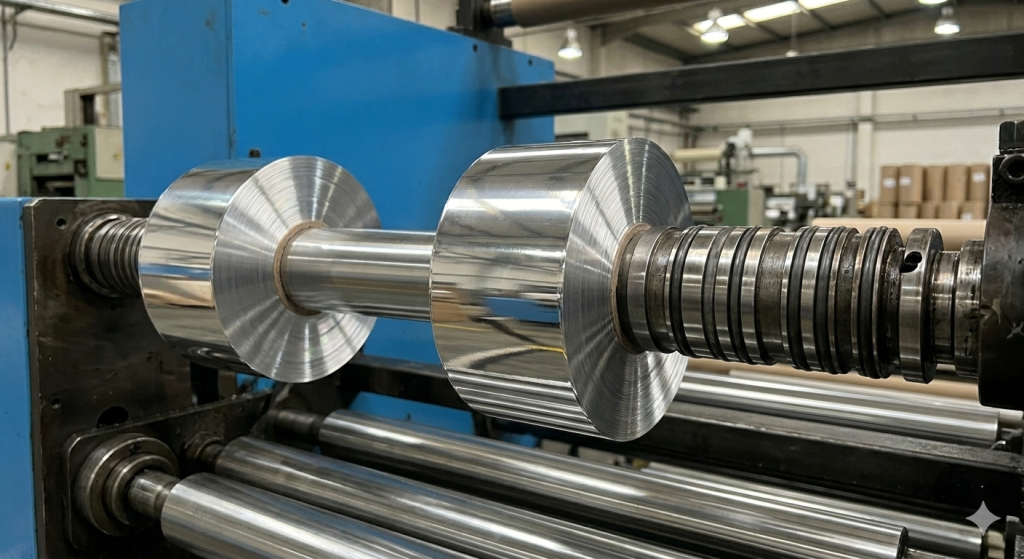
In the final stage, the system sends large rolls to precision slitting machines. These machines cut the massive rolls into millimeter-precise dimensions. Finally, these high-quality films become suitable for products such as potato chips, coffee, and nuts. Thanks to our diverse packaging solutions, your products always reach the consumer in a healthy manner. You can obtain more information about packaging standards through PAGDER (Turkish Plastics Industrialists’ Association).